Black Walnut Co.  ·  Rhode Island

How I think about the work.

The decisions that go into a piece before a single cut is made — on wood, on voids, on resin, on proportion, and on what makes a commission worth building.

A void in a slab is proof the tree was alive and imperfect, same as the rest of us.

Every board I work with has a history written into it — cracks from years of stress, knots where a branch used to be, gaps where the wood simply pulled apart as it dried. I don't sand those out or pretend they're not there.

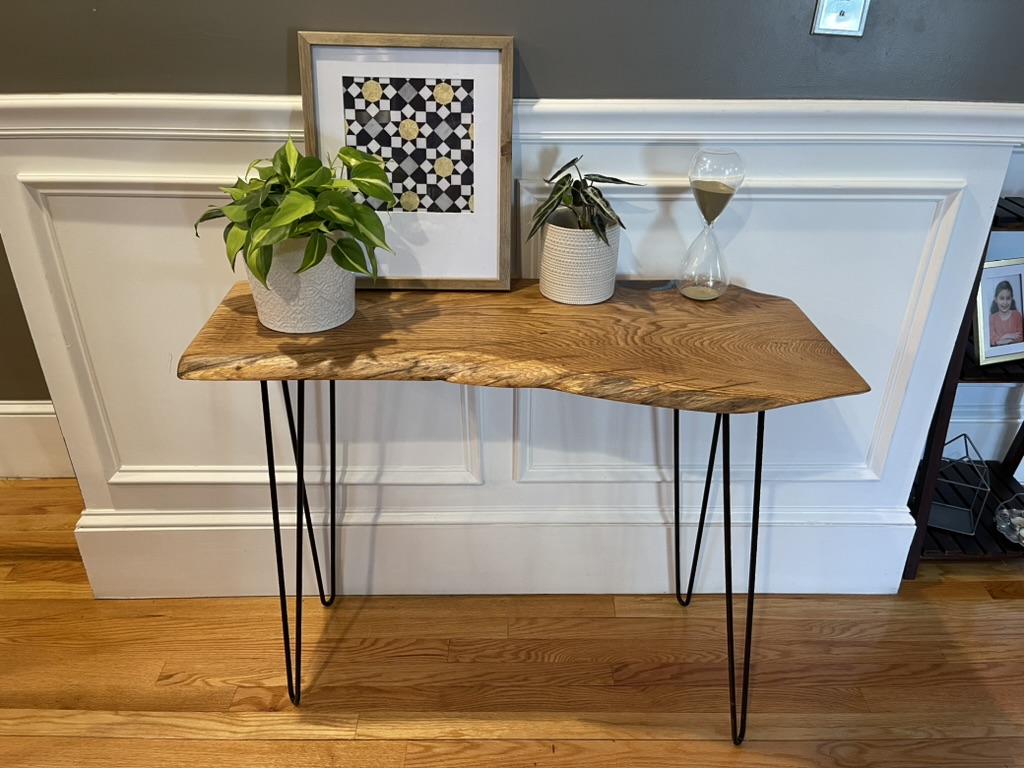
My job is to work with that shape, not against it. If a piece has a natural wave running through it, like the console table with the S-curve down its length, that curve dictates the whole design instead of getting planed flat and forgotten.
I know where the slab came from and often the story of the tree it was cut from — and that matters to me more than getting the cheapest board available.

I work primarily in black walnut and white oak, sourced from local suppliers here in Rhode Island whenever I can. Buying local keeps the material honest too.

The goal is always for the fill to feel like it grew there, not like it was added after the fact.

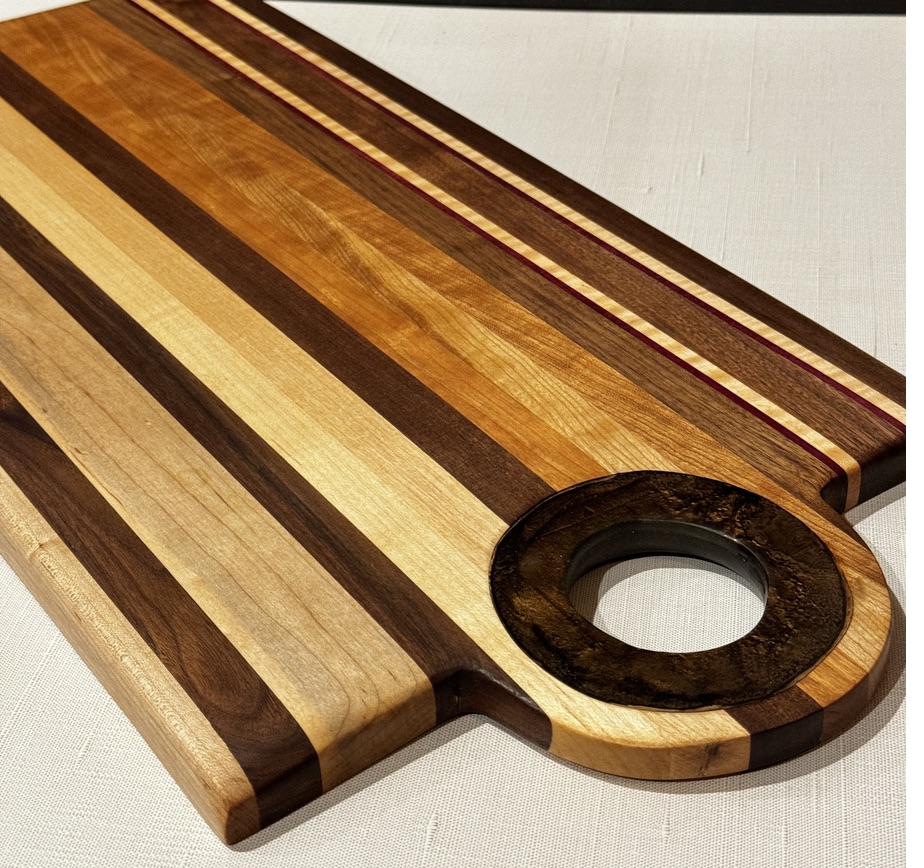
I use resin to complete a piece, not to hide a flaw. When you look at the walnut coasters with the dark, textured resin river running through them, or the charcuterie board with the sculpted figure poured into the void, that resin isn't covering up a mistake.

It's tracing the exact shape the wood gave me and turning it into part of the design.

If filling a void doesn't add something, I leave it alone.

Not every void gets filled. Some gaps are structural — they'll only get worse over time or genuinely weaken the piece — and those get epoxy for both durability and looks. Others are purely cosmetic, small character marks that don't need anything done to them at all.

I look at each piece on its own and ask whether filling it adds something or just adds resin for the sake of it.

It looks the way it looks specifically because of that flaw, not despite it.

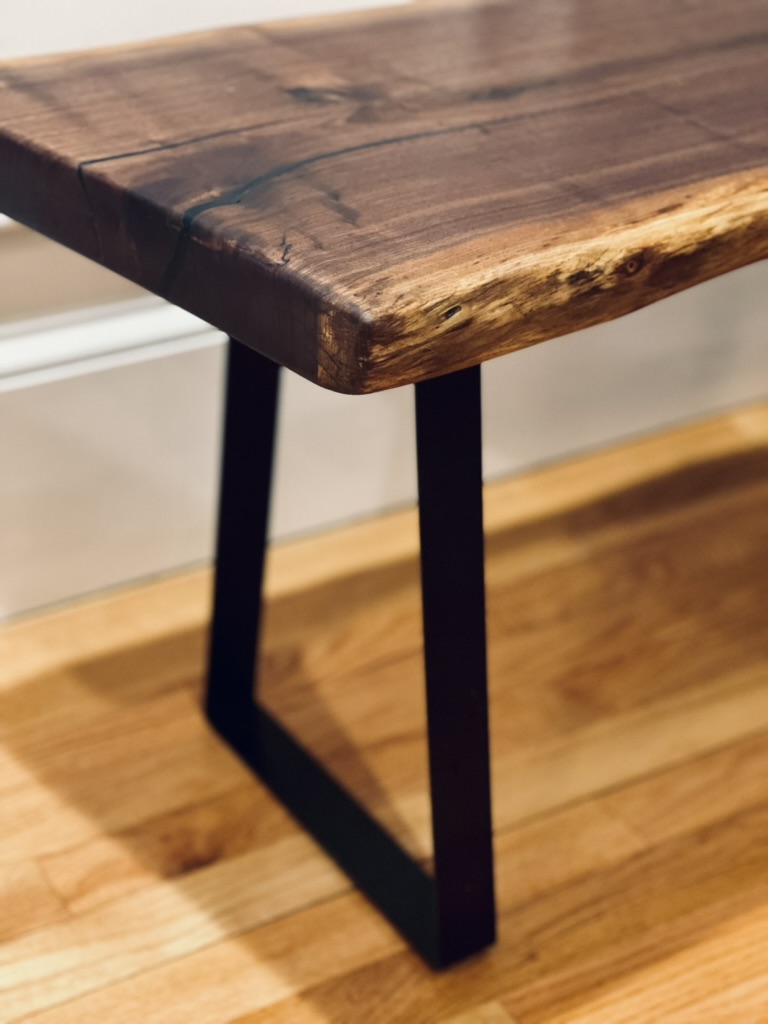
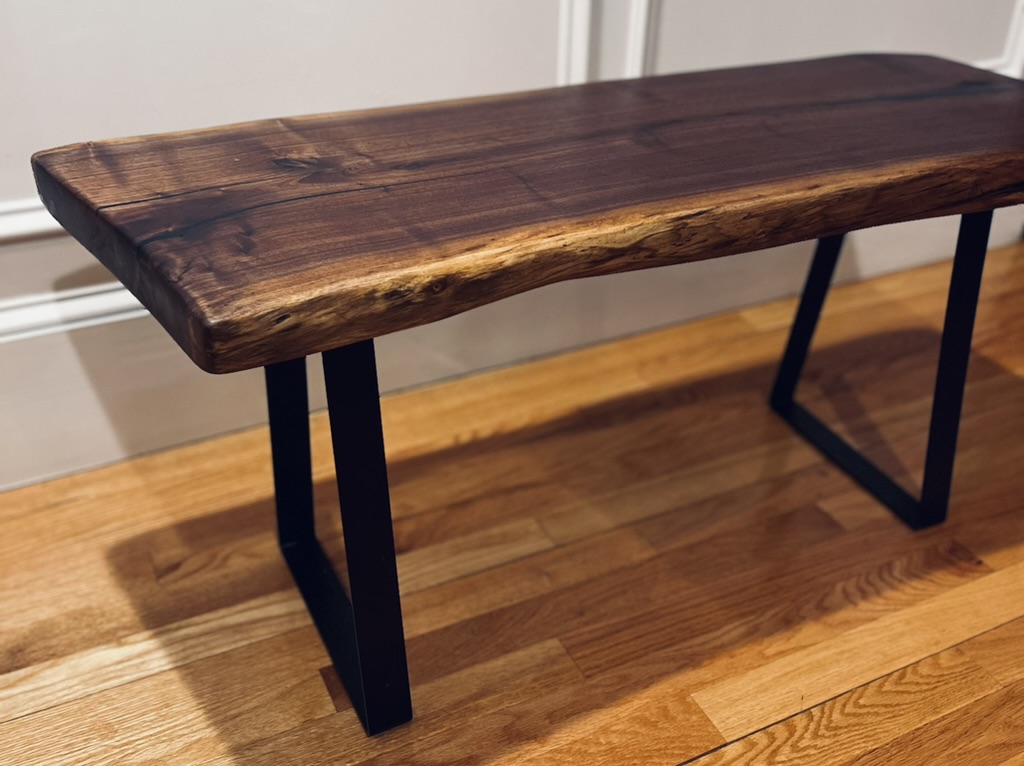
The dark walnut bench started as a slab with a deep natural check running almost the full length of one edge, along with a cluster of knots near one end that most people would have cut around entirely. Instead I let the check stay open as a live edge feature and built the trapezoid steel legs to echo its angles.

What could have been scrap ended up being one of the pieces I'm proudest of.

A live edge slab already has a strong personality, so the job is to build everything else quietly around it.

Proportion first. Simple hairpin or trapezoid steel legs, a finish that deepens the grain without masking it, and no extra ornamentation competing with the wood itself.

Function matters just as much as look. A bench needs to hold weight and boots comfortably. A serving board needs to survive a kitchen. If a design choice doesn't serve both the eye and the use, it gets cut.

Commissions start as a conversation, not a spec sheet.

I want to know how a piece will actually be used — in a lobby, an office, a home — and what feeling the space is going for. From there I usually source a slab or two that could work and walk the client through the actual grain and voids in that specific piece of wood, rather than promising something generic.

The final design comes out of that back and forth, so what you get is shaped by your space and by what a particular board naturally wanted to become.

If you have something in mind, I'd rather hear about the space than the dimensions.

Jim Tomasso  ·  Black Walnut Co.

Start a conversation